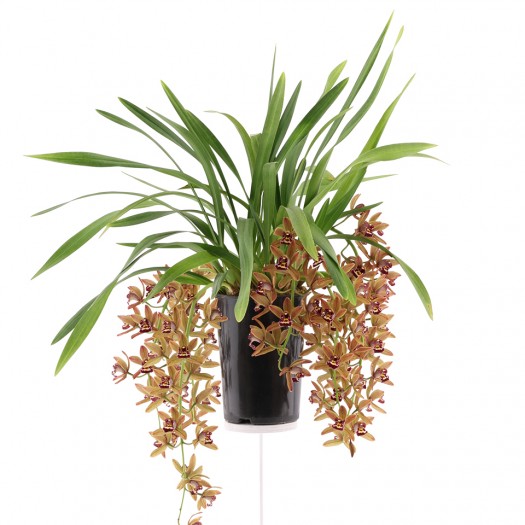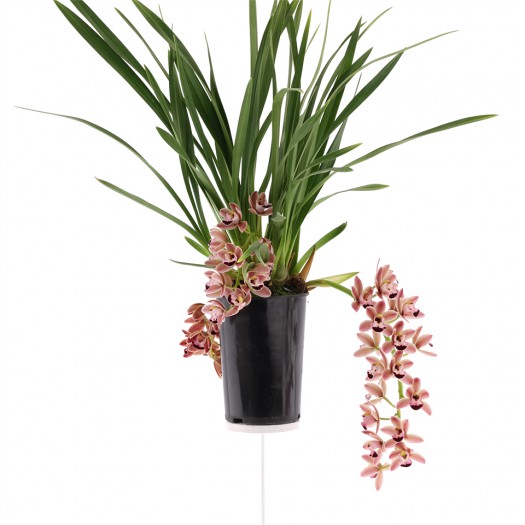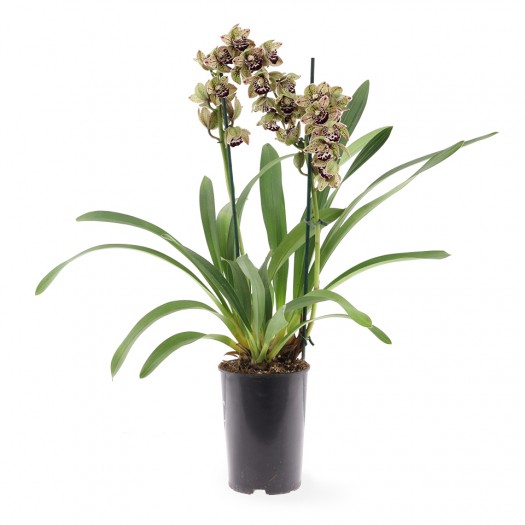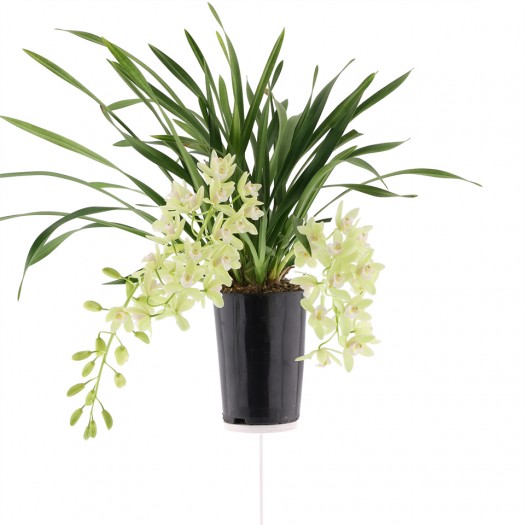
Cascade Cymbidium

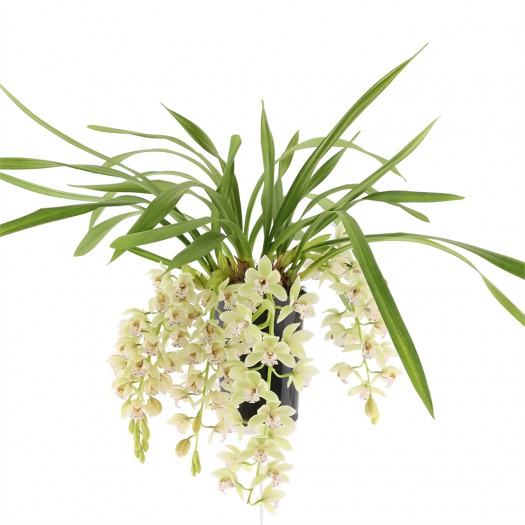
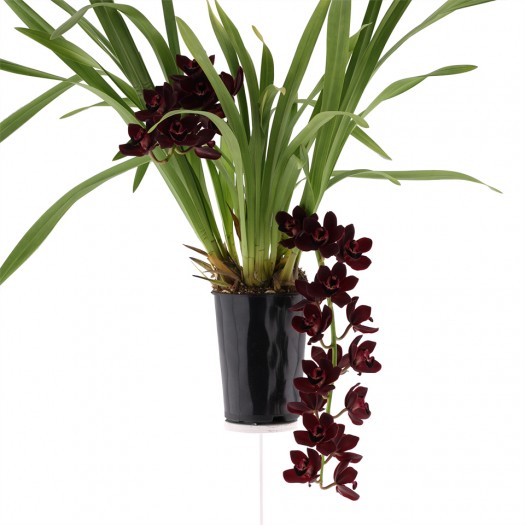
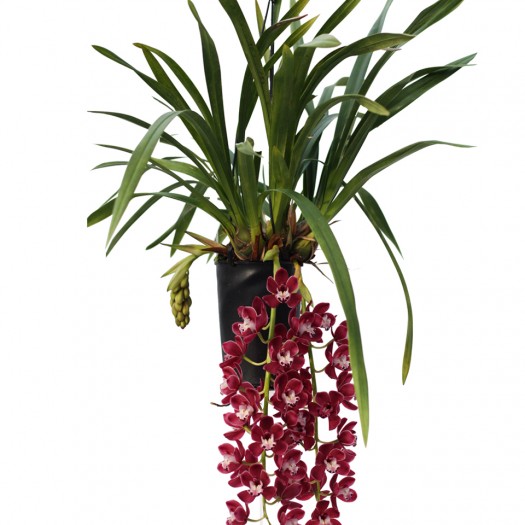
The botanical parents of the Cascade Cymbidiums that we grow, grow in dead trees and on rock walls, at an altitude of 1500 to 2200 meters in Taiwan, Vietnam and China. Here it is not necessary for the flowers to stick out above the leaves and so the flowers are hanging. This makes the Cascade Cymbidium so special and loved.

The name Cymbidium is probably derived from the Greek ‘kymbos’, which means boat, hollow. In this case it refers to the lip shape of the flower. In Asia the plant is often given to friends as a symbol of friendship and respect. With a Cymbidium you not only give a beautiful plant as a gift, you also give a nice message to your loved ones.

The Cascade Cymbidium is an earth orchid. This means that the roots grow in the soil and extracts its food from there (unlike most orchids which extracts the food with their aerial roots). It is a very strong plant that likes to grow in colder conditions. This makes the plant particularly suitable for our climate. The Cymbidiums bloom between October and March, depending on the species. You can expect an average of four weeks of flowering. To get the plant to flower again a year later, you need some patience. But with good care your Cascade Cymbidium will become more beautiful every year.

At LZ Orchids you will find, besides the botanical species, several of our own crosses. In our Shop you can see all types in a row.

Assortment
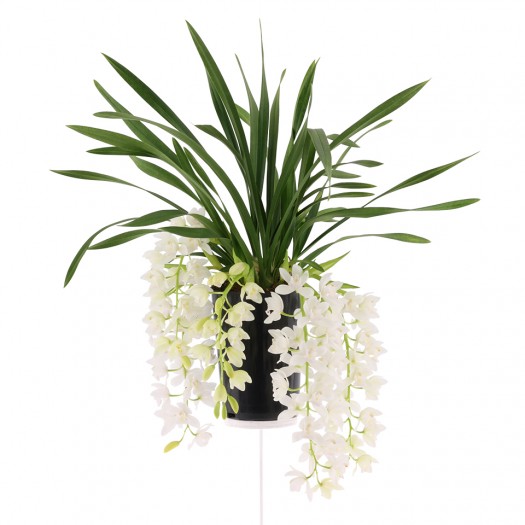
Assortment

Care tips

With proper care, your Cymbidium will reward you for years with beautiful flowers in the winter months.

Place the Cymbidium in a light spot in the room or conservatory. Especially in the dark winter months, the plant needs all the light that is available. The ideal temperature during flowering is between 12 and 18 degrees. In the living room it will often be warmer. This is not a problem, but the flowers will have finished earlier. At 12 degrees the plant can bloom for twelf weeks, at 21 degrees it will not be more than three weeks. Avoid a location above the heating. If your plant is facing south, make sure that the leaves in the spring and summer do not burn due to direct sunlight.

The Cascade Cymbidium needs more water than many other orchids, because it is an earth orchid and not an epiphytic. You can treat the Cascade Cymbidium approximately the same as other pot plants.

There are three ways to water the plant:

  1. Once a week, dunk the pot in a container of water and leave it for about three minutes. Then let it drain well so that the roots do not stand in the water;
  2. Water the plants with the watering can twice a week from the top. Make sure that the roots do not stand in the water, rather too dry than too wet;
  3. Put a waterstick  in the bottom of the breeding pot, about 1/3 in the pot and 2/3 below it. Then put the plant in a high, watertight pot and fill it so far that the pot is not in the water. The water stick will then stand 7 cm in the water and ensure that the pot remains sufficiently moist. Top up the overpot once a week.

The Cymbidium requires very little manure during the winter months. In spring, when the plant has finished flowering and new shoots develop, it is allowed to fertilize regularly with a mixed fertilizer containing sufficient nitrogen (N). In autumn, reduce the frequency of manure application again.

If the plant almost bursts out of its pot, it is time to repot the plant. Look for a tall pot, because the roots of the Cascade Cymbidium grow best here. Use an airy mixture, but certainly no ordinary orchid mixture. For Cymbidiums, this mixture does not retain enough water. In our online store you will find a special Cymbidium mixture, in which we also grow our own plants.

The Cascade Cymbidium naturally blooms once a year, so if you have bought a plant in January, it will not get new flower branches until January the following year.

It is not so easy to get this done, so here are some tips:

  • Give the plant the lightest possible location in winter;
  • Provide sufficient water so that the plant remains in good condition;
  • When the plant has finished flowering, find a cooler place in the house with lots of light and give less water;
  • Put the plant back in a warmer place after twelve weeks and give enough water again. You can also manure the plant regularly during this period;
  • If possible, put the plant outside in the summer months, not in bright sunlight, but in a light place. Keep the pot mixture moist. If you can, put the plant with pot and all in the ground, so that it dries out less quickly;
  • In autumn, when the outside temperatures drop below 10 degrees, remove the plant.

Contact

We look forward to hearing from you.

LZ Orchidee
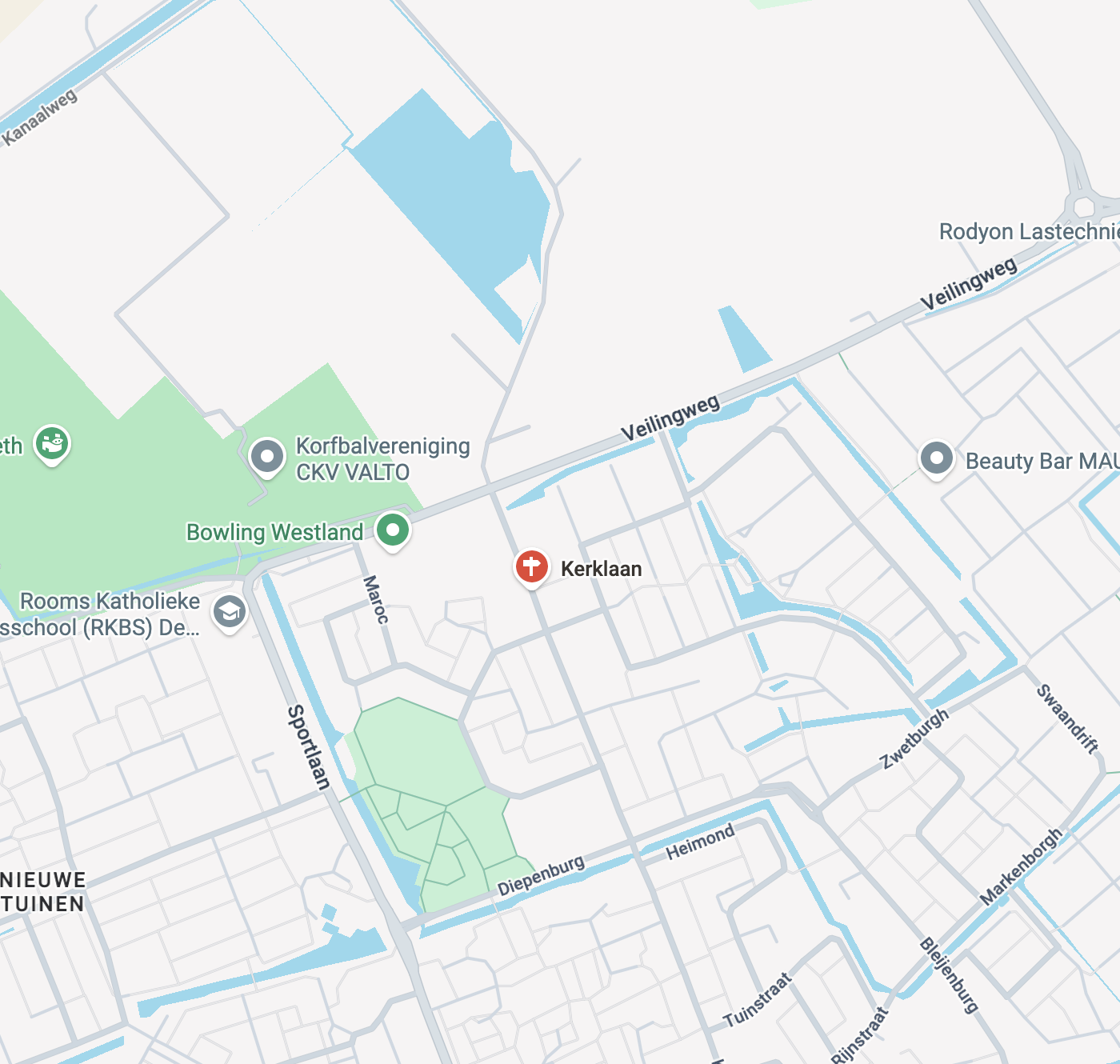
Kerklaan 116
2678 SZ De Lier
The Netherlands
Call us:
+316 22 23 31 02
Email us: info@lzorchidee.nl